War has a new face — and it moves on tracks… or wheels
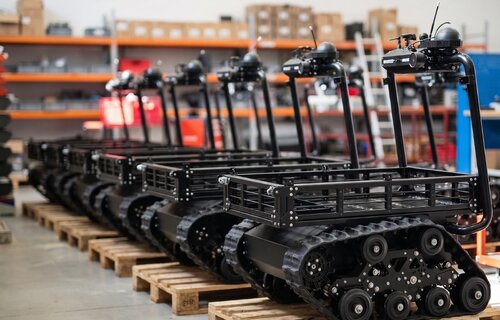
It all begins with a sound. A quiet rumble, like a metal heartbeat. It carries confidence, weight, and cold determination. It is not a tank — but it looks no less menacing. It is a tracked ground drone, doggedly pushing through mud, debris, and mines. Without fear. Without fatigue. Without questions.
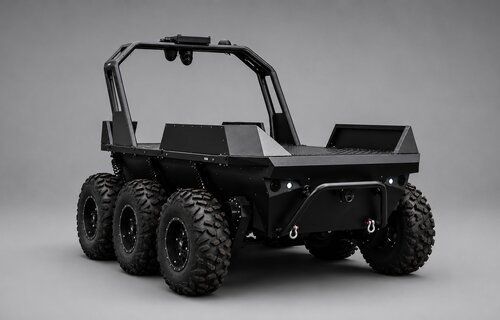
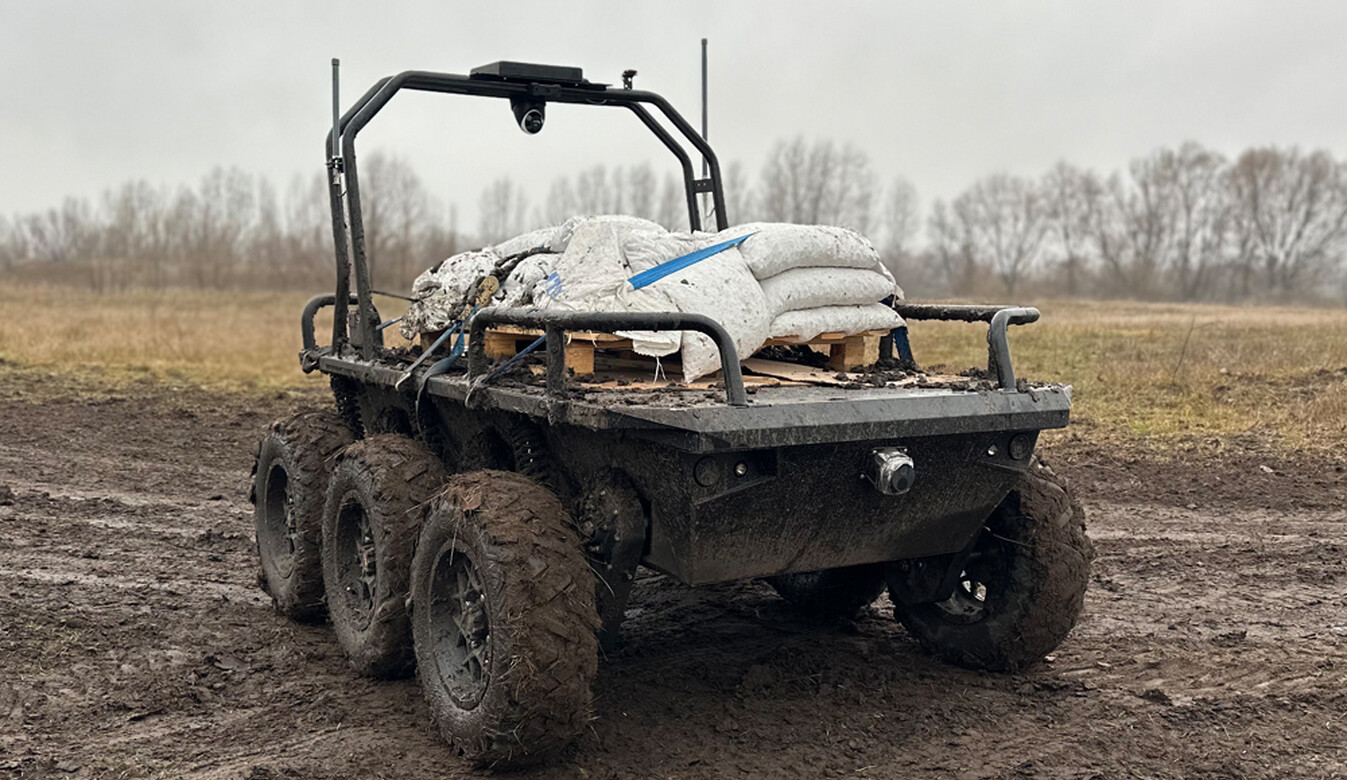
Sometimes it is a compact wheeled platform that reaches places where silence matters more than armor. It is fast, agile, autonomous. It will not speak, will not cry, and will not tire. Its task is to deliver, evacuate, cover.
Machines do not replace people at the front — they protect them. Instead of rescuing a brother-in-arms from under fire at the cost of another life, today a robot can do it. For the first time in history, war has gained a steel ally — and this ally is already changing the rules of the game.
What is a ground drone and why it is no longer science fiction
UGV — Unmanned Ground Vehicle. But this is not just a "remote-controlled machine." It is an autonomous or semi-autonomous platform capable of carrying out tasks in conditions where a human faces death.
They come in different types:
– tracked — rugged and all-terrain;
– wheeled — mobile, lighter, faster;
– hybrid — with adaptive suspension that adjusts to the terrain.
Missions?
– Logistics: delivery of ammunition, water, equipment
– Evacuation of the wounded
– Reconnaissance, engineering work, assault support
Science fiction? No. The war in Ukraine has made this technology widespread. If in 2014 these were makeshift experiments, by 2024 it is already systematic deployment. The state, volunteers, private manufacturers — everyone has understood: this is not the future. It is a need forged in battle.
Where people used to die, machines now drive
Imagine the situation: the front line, 800 meters to the positions. You need to deliver 60 kg of shells and bring back a wounded soldier.
Scenario 1 — a soldier crawls under fire.
Scenario 2 — a tracked Ratel platform slowly but surely covers the route. Even if it is hit — no one dies.
This is not theory. These are cases from the front line. The drones have already traveled thousands of kilometers through the "gray zone," evacuated hundreds of the wounded, and delivered tons of cargo.
Before, the front offered a choice: either fast and risky, or not at all. Now there is a third option: a robot. And this is a change not only in how the task is carried out, but in the very philosophy of war. When you have the ability not to risk a life — that is already a different paradigm.
Logistics without fuel, maps without people, delivery without fear
Traditional military logistics means risk, diesel, nerves, and losses. Especially at the "zero line." Ground drones break this model.
First, autonomy. The platforms can operate for up to 8 hours without recharging, moving along preset routes or under an operator's control from cover.
Second, adaptability. They "remember" the terrain, can bypass obstacles, and maneuver between craters.
Third, they do not fear fatigue, stress, or concussion.
A modern UGV system can provide:
- supplies for a squad (ammunition, food, drones)
- evacuation from the point of impact
- transport of mines, nets, tourniquets, radios
The cost of such a trip is many times lower than a crewed truck. And the risk is close to zero.
Safety that moves
One of the most important areas is MEDEVAC (Medical Evacuation). Before ground drones, evacuating a wounded soldier from a position always put a second, third, sometimes even a fourth life at risk.
Now the platform drives out to the wounded soldier, equipped with a stretcher, stabilized suspension, and sometimes even a compartment for medications. All of it — without a single shot fired at the medic or comrade.
And there are engineering tasks too:
– demining (without direct human contact)
– laying communication lines
– towing other devices
A robot that not only carries but also "sees" — camera, thermal imager, LIDAR — is already an element of reconnaissance. And combined with a UAV, it becomes a combat support unit as well.
The "iron brother-in-arms": how the front accepts robots
This is perhaps the most human part of this story. Because war is not only about technology, but about trust. And when you see a soldier stroke a platform's armor like a dog — you realize the machine has become part of the unit.
At first there was skepticism: "it will glitch," "it breaks," "it is a toy."
Then curiosity: "How is it controlled?", "Can it drive into the treeline?"
Now it is routine practice: "Call the Ratel, have it drive up."
The soldiers gave them names. The drones became "one of ours." Because in the moment a machine pulls you out of hell — you no longer think about whether it is a robot or not. It is a brother-in-arms. It just does not speak.
What next? A new generation of robots and the dream of an autonomous unit
We stand on the threshold of major changes. Platforms with elements of artificial intelligence are already being developed: they can make simple decisions without human intervention.
In the future, these will be UGV "swarms" that interact with one another. One carries shells, another provides covering fire, a third evacuates. This is a new tactic, a new level of autonomy.
But along with the technology, questions arise:
- Can firepower be entrusted to a machine?
- Who bears responsibility for the decision?
- How do we avoid chaos in real combat conditions?
These questions are not philosophy. They lie at the foundation of the army's future. And it is Ukraine that is now shaping the answers to them. Not in a laboratory. But on the battlefield.
The war that teaches us to live: how robots change not only tactics but the philosophy of war
Ground drones are not just "equipment." They are an expression of humanity. They are a way to make war less bloody, if only by a millimeter. They are a chance to save those who just yesterday were doomed.
They will not replace the soldier. But they have already changed his role. And this is only the beginning.
Because in the 21st century, victory will belong not to those who have more people, but to those who know how to protect their own — and use machines wisely.